
Jaw clenching that won't release.
What it's really telling you.
You've tried the night guard. Maybe the massage. Possibly the Botox. The jaw still tightens by mid-morning and stays locked through the afternoon. By evening, the headache is back. The dental industry has an answer for what your jaw is doing — and it's not wrong, exactly. It's just incomplete. The persistent clenching isn't a dental problem. It's a nervous system one. And once you understand what your jaw is actually doing, the path to releasing it changes completely.
What does an anxiety jaw actually feel like?
The clench isn't always loud. It often hides in plain sight.
You notice it during your fourth back-to-back call, when you suddenly realise your teeth have been touching for two hours. You notice it driving home, when your jaw aches and you can't remember the last time it was relaxed. You notice it in bed, after a stressful day, when sleep won't come and your face feels like it's holding a fist.
If you wake up with a sore jaw, find yourself grinding through stressful conversations, or feel a low-grade tightness from your jaw down through your neck and shoulders — you're not imagining it. The jaw is one of the most hypervigilant muscle groups in the body. When the system is on alert, the jaw is one of the first places to show it.
And it shows it whether you're consciously stressed or not.
Why night guards and Botox don't solve jaw clenching
The standard explanation goes like this: stress causes your jaw to tighten. Tight jaws cause grinding. Grinding damages teeth. Therefore, protect the teeth with a night guard or relax the muscle with Botox.
All of that is partially true. A night guard does protect your teeth from the consequences of grinding. Botox does temporarily reduce the muscle's ability to contract. Massage releases acute tension. These interventions are real and they help.
But here's what they don't do: they don't address why your jaw is clenching in the first place.
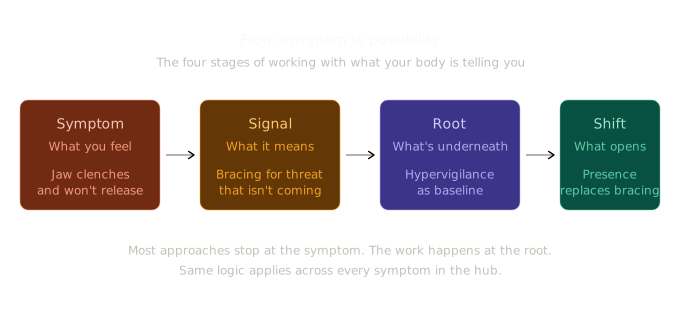
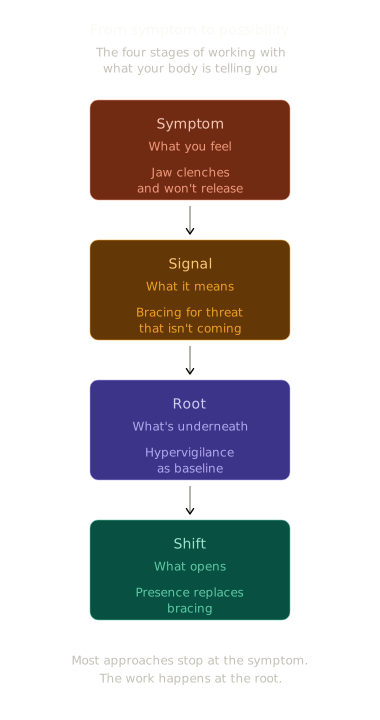
If your nervous system is running a hypervigilance pattern — staying braced for impact even when no impact is coming — your jaw will keep clenching around the night guard. It will tighten again as the Botox wears off. The massage relief lasts until your next stressful meeting. You're treating the smoke. The fire is somewhere else.
Source: Two Brakes, One Broken System — USC Ostrow School of Dentistry
What is the root cause of jaw clenching?
Your jaw is bracing for impact that isn't coming.
The jaw is wired into the body's threat response system. When the nervous system perceives danger, the jaw is one of the first muscles to engage — preparing to bite, hold, or protect. This is ancient wiring, designed for genuine physical threat.
The problem: in modern professional life, the threats are no longer physical. They're internal. Unresolved decisions. Conversations you haven't had. Deadlines you're carrying. A version of yourself you have to perform. The nervous system can't tell the difference between a sabre-toothed tiger and a Tuesday morning leadership meeting. It responds the same way to both — with bracing.
Over time, the bracing stops being a response and becomes a baseline. The jaw doesn't return to neutral after the meeting ends, because the system has learned that another threat is always coming. So it stays ready.
What you call 'focus' or 'intensity' or 'professionalism,'
your nervous system calls threat response.
And it's running 24 hours a day.
Sources: The Neural Substrates of Bruxism — Frontiers in Neurology (2024) · Neurobiology of Bruxism: The Impact of Stress — Spandidos Publications (2024)
How jaw clenching shows up for high performers
The pattern looks different depending on the role — but it's the same underlying mechanism.
For sales leaders: You're in back-to-back calls, holding the energy of the team, managing up and down. You don't notice your jaw has been locked for three hours. You call it focus. Your nervous system calls it threat response.
For founders: You clench through every pitch. Every board call. Every miss against forecast. You think you're being professional. You're actually burning energy your decision-making brain needs later in the day.
For sales reps: You grind at night after a bad pipeline day. Your body is processing what your mind refused to feel during working hours. The jaw is doing the emotional work you didn't have time for.
Different roles. Same pattern. The jaw is downstream of a nervous system that's never been given permission to come off alert.
What changes when the pattern releases
When the hypervigilance pattern is recognised and rewired, the jaw release follows. Not through stretches or mouth guards — but because the internal environment has changed. The system has learned the difference between genuine threat and habitual alert. (Here's how that work actually happens.)
People describe walking into high-stakes situations with a physical ease they haven't felt in years. The jaw stops being the first thing they notice in the morning. The end-of-day headache fades. Sleep gets easier because the face isn't braced through it.
But the bigger shift is what becomes available alongside the physical release. Presence replaces bracing. They're in the room rather than defending against it. For sales leaders and founders, this translates directly to grounded communication, sharper listening, and less energy spent anticipating problems that never arrive.
The jaw was never the problem. It was the report card. And once the system shifts, the report changes too.
Your jaw isn't broken.
The pattern underneath it is.
Lead Yourself First.
What does it mean if I clench my jaw all the time?
Persistent jaw clenching usually signals a chronically activated nervous system. The jaw is wired into the body's threat response — when the system stays in low-grade alert, the jaw stays braced. It's less a dental issue than a regulation issue.
Is jaw clenching a sign of anxiety?
It's frequently associated with anxiety, but the more accurate framing is that jaw clenching is a sign of nervous system dysregulation. Anxiety, chronic stress, hypervigilance, and unprocessed emotional load all show up as physical bracing — and the jaw is one of the first muscles to register it.
What emotion is trapped in the jaw?
The jaw commonly holds suppressed assertion, withheld words, and the effort of staying composed. Many people who clench their jaw report a pattern of emotional containment — not expressing what they actually feel in the moment. Over time, the body holds what the voice didn't.
Why doesn't my night guard help with jaw tension?
Night guards protect your teeth from grinding damage, but they don't reduce the clenching itself. If your jaw is clenching because your nervous system is bracing, the muscle will keep contracting around the guard. The guard treats the consequence; it doesn't address the cause.
Related signals
If your jaw is doing this, your sleep often is too.
Waking at 3am with your mind already racing
The cortisol spike is real. So is the spiritual interpretation. But neither explains why your brain wakes you up with a priority list — every single night.