
Waking up at 3am with your
mind already racing.
Here's what it's actually telling you.
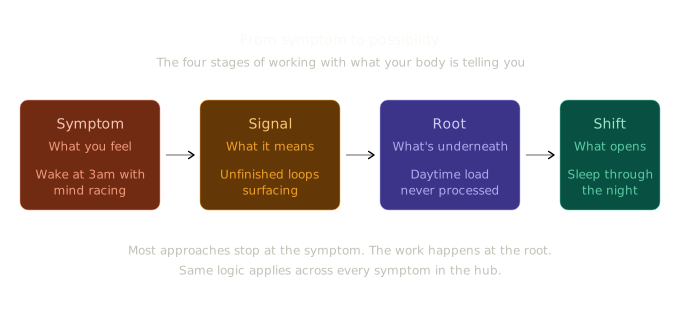
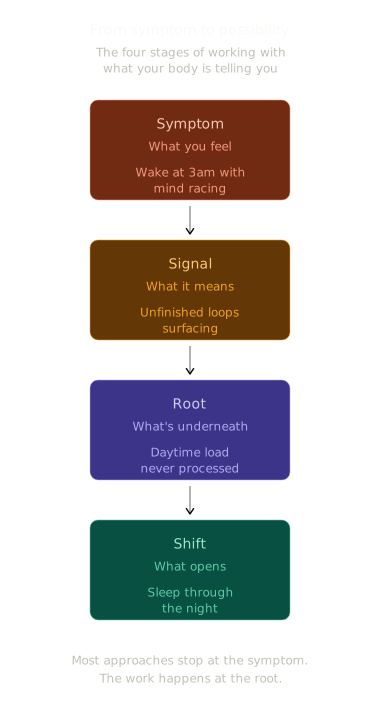
You go to bed exhausted. You fall asleep without trouble. Then at 3am — sometimes 3:47, sometimes 4:12 — your eyes open. Your mind is already running. The Tuesday meeting. The email you forgot to send. The half-decision that's been sitting on your chest for three weeks. You're not in pain. You're not too hot or too cold. You're just suddenly, completely awake. The internet has plenty of explanations: cortisol, blood sugar, liver detox, spiritual awakening. Some of them are partially true. None of them are the whole story. The 3am wake-up isn't a sleep problem. It's a nervous system one. And once you understand what your brain is actually doing at that hour, the path back to sleeping through the night changes completely.
What does waking up at 3am every night actually feel like?
The wake-up itself is quiet. There's no jolt, no nightmare, no obvious trigger. Just sudden alertness, often before your alarm has any business going off.
What comes next is the giveaway. Within seconds, your mind is already loading. Not gently — efficiently. The most pressing item arrives first. Then the second. Then the meeting you've been avoiding. Then the conversation you didn't finish. By 3:15am, you've mentally rehearsed the next day. By 4am, you're rewriting an email you sent six hours ago.
If you've tried to fall back asleep, you know how it goes. The harder you try, the more awake you become. You might check the time once, hoping it's later than you think. It almost never is.
By 5:30am you finally drift off. By 6:45am the alarm goes. You start the day already behind on rest.
If this happens once a week, it's life. If it happens four nights a week, it's a pattern.
Why cortisol explanations are right but incomplete
The most common explanation goes like this: your body has a natural cortisol awakening response. Cortisol levels begin rising in the early hours of the morning to prepare you for the day ahead. In a regulated nervous system, this rise is gradual and goes unnoticed. In a dysregulated one, the rise spikes earlier and harder — and you wake up.
All of that is true. The cortisol research is solid. The HPA axis (the body's central stress response system) does run on a daily rhythm, and chronic stress does shift that rhythm in ways that produce early waking.
Other explanations have partial validity too. Blood sugar dips can wake you. Alcohol metabolism creates rebound alertness. Hormonal fluctuations affect sleep architecture. Even traditional Chinese medicine's interpretation — that 3am to 5am is when liver energy peaks — points to something real: there is a biological shift happening at that time.
But here's what none of these explanations address: why is your mind already racing the moment you wake?
A cortisol spike alone doesn't explain why your brain immediately knows exactly which problem to load first. It doesn't explain why the items aren't random — they're prioritised. It doesn't explain why you wake up with a list.
Source: Cortisol Awakening Response and Sleep — Frontiers in Neuroscience
What is the real reason you keep
waking up at 3am?
Your brain is doing the work you didn't have time for during the day.
The unconscious mind processes what the conscious mind couldn't. Decisions you avoided. Conversations you didn't have. Emotional content you contained because you were in meetings, in front of clients, holding it together. None of that disappears just because you didn't have time to feel it. It gets queued.
Sleep is supposed to be when the queue empties. The brain consolidates memory, processes emotional material, and integrates the day. But if the daytime container was too full — if you ran on pure execution mode without any genuine processing — the queue doesn't get cleared. It backs up.
Around 3am, two things converge. The cortisol rhythm starts its natural rise. And the deeper sleep stages begin transitioning toward lighter ones, where the unconscious mind has more access to the conscious one.
In a system with normal load, this transition is invisible. In a system carrying yesterday's backlog, plus the day before's, plus a quarter's worth of unprocessed pressure — this transition wakes you up. The cortisol peak meets a system that's been waiting to surface what daytime suppressed.
So you wake up. And the brain immediately presents the most pressing item — because that's what it's been holding onto.
The cortisol spike is real. But it's hitting a system that was already loaded.
And that's why no amount of magnesium, sleep hygiene, or breath work alone resolves it. They address the body. They don't address the load.
Sources: Sleep, Memory Consolidation, and the Default Mode Network — Nature Reviews Neuroscience · Chronic Stress and Sleep Architecture — NIH/PMC
How the 3am wake-up shows up for high performers
The pattern looks different depending on the role — but the mechanism is the same.
For sales leaders: You wake up at 3am thinking about the rep who isn't hitting numbers. About the conversation you've been postponing. About the forecast you have to defend on Friday. You solve the problem at 3am. Then again at 4am. You're not motivated. You're stuck in a rumination loop your conscious mind couldn't process during the day.
For founders: The 3am wake-up is your brain's version of a priority list. Everything you didn't finish, didn't decide, didn't feel during the day — it all queues up and surfaces at exactly the worst time. You think it's "the cost of building something." It's actually a system that's never been given permission to put anything down.
For sales reps: You wake up knowing exactly what you're dreading today. That call you have to make. That deal that's slipping. That awareness isn't useful at 3am — it's just anxiety with better timing. Your brain is processing the pressure your day didn't have room for.
Different roles. Same pattern. The 3am wake-up isn't a sleep failure. It's the system catching up on what wasn't processed when it was supposed to be.
What changes when the loop gets cleared
When the unfinished loop pattern is resolved — when daily processing actually happens, decisions get made, conversations get closed, emotional load gets discharged rather than contained — the 3am wake-up stops.
The cortisol rhythm continues its natural rise. But it meets a different system. One that doesn't have a queue waiting to be loaded. One that's already integrated yesterday before sleep started.
People describe sleeping through. Not occasionally — consistently. The 3am wake-up that had been a nightly visitor for years simply stops happening. They wake naturally, when they're meant to, with the absence of that immediate dread that used to start the day in deficit.
And the quality of the morning changes the entire arc of the day. The first thoughts of the day become constructive rather than anxious. Decisions that used to feel heavy at 7am feel lighter. The cumulative cost of years of fragmented sleep — the brain fog, the emotional reactivity, the chronic underrecovery — starts to lift. (Here's how that work actually happens.)
The 3am wake-up was never the problem. It was the report card. And once the system shifts, the report changes too.
Your sleep isn't broken.
The pattern underneath it is.
Lead Yourself First.
Why do I keep waking up at exactly 3am?
The 3am window is when natural cortisol production begins to rise and sleep transitions from deeper to lighter stages. In a regulated nervous system, this happens silently. In one carrying chronic stress load, the rise is sharper and earlier — and the lighter sleep stages give the unconscious mind enough access to surface what wasn't processed during the day. The exact time varies (3am, 3:30, 4:15) but the mechanism is the same.
Is waking up at 3am a sign of anxiety?
Not exactly — it's more accurate to say it's a sign of nervous system dysregulation that often coexists with anxiety. The wake-up itself isn't anxious. What follows it (the immediate mental loading, the inability to fall back asleep, the dread) is the anxiety response. Both are downstream of the same underlying pattern: a system that doesn't get to fully discharge during the day.
How do I stop waking up at 3am with my mind racing?
The body-level interventions (magnesium, sleep hygiene, breath work, eliminating screens) help — but they address the symptom, not the cause. Lasting change typically comes from rewiring the daytime patterns that create the overnight backlog: making decisions you've been avoiding, closing conversations you've been postponing, and building genuine processing time into the day so the unconscious mind doesn't need to do the work at 3am.
What hormone wakes you up at 3am?
Cortisol is the primary one — its natural awakening response begins in the early hours and is amplified by chronic stress. But hormones don't act in isolation. The cortisol rise meets a sympathetic nervous system that's been chronically activated, and a brain that hasn't had a chance to process the day's load. The hormone is the trigger; the loaded system is the reason it lands so hard.
Related signals
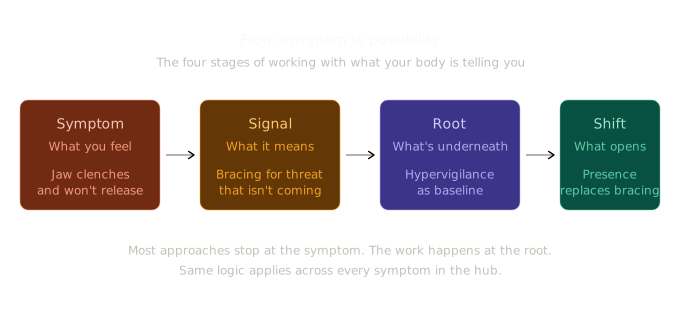
If you're waking at 3am, your jaw is often doing this too.
Jaw clenching that won't release
You've tried the mouth guard. The massage. Maybe the Botox. The jaw still tightens by 10am and stays locked through the day. There's a reason — and it's not dental.