
Jaw clenching isn't a dental problem
And neither is the teeth grinding at night
You're on your third call of the morning. You haven't noticed it yet, but your jaw has been locked for two hours. Your teeth are pressed together. The muscles along the side of your face are tight. You'll notice it later — maybe when you yawn, maybe when you eat lunch, maybe when your dentist tells you you've been grinding again. Jaw clenching gets treated as a dental issue or a stress symptom to manage with a mouthguard. It's neither. It's a bracing pattern — and the pattern underneath is what this page explains.
What jaw clenching actually feels like
The jaw pain itself shows up in different ways. A dull ache along the side of the face. Soreness in front of the ear. Pain when you chew, when you yawn, sometimes when you talk. A tightness across the temples that radiates downward. For some people it's worst in the morning. For others it builds across the day. Most have learned to live with it — assuming it's wear and tear, age, or something dental. For chronic sufferers, it's usually none of those. It's the cumulative cost of muscles working overtime, every day, for years.
This naturally introduces jaw pain as the broader symptom, then the existing content covers the clenching as the cause.
It rarely announces itself. The clench builds in the background while you're focused on something else — a call, an email, a difficult conversation. You catch it accidentally. A tightness in the temples. A soreness in the cheek muscles. The realisation that your teeth have been pressed together for the last hour without you knowing.
For some people it's worst at night — waking with a sore jaw, headache, or the dental evidence of grinding. For others it's during the day, particularly through high-stakes meetings or pressured work. For many, it's both. The mouthguard helps with the wear and tear. It doesn't stop the clenching.
The nighttime version often runs harder than the daytime one. While you're awake, you can catch the clench and release it consciously. While you're asleep, there's no override available. The jaw locks. The teeth grind. The muscles work through the night without interruption. You wake with a sore jaw, a tension headache, or the dental evidence that something has been working hard for hours. If you've been told you grind your teeth at night, this is what's happening. And if you're searching for how to stop grinding teeth at night, the work isn't on the jaw, it's on the system running underneath it.
What makes this pattern particularly disorienting is that it often happens when you're not consciously stressed. You feel fine. You're not anxious. And your jaw is locked. That gap between conscious experience and physical reality is the first clue something else is running underneath.
What most advice gets wrong
about how to release jaw tension
The standard playbook for chronic jaw pain, clenching, and what dentists call bruxism is well-known: wear a night guard, get a massage, do jaw stretches, take magnesium, manage stress, drink more water, avoid hard foods. For acute tension with a clear trigger, these tools help.
For chronic jaw clenching that returns no matter what you do, they consistently miss the mechanism. The mouthguard protects your teeth — it doesn't stop the clenching. The stretch loosens the muscle — for a few minutes. The advice to "manage stress" assumes you're not already trying.
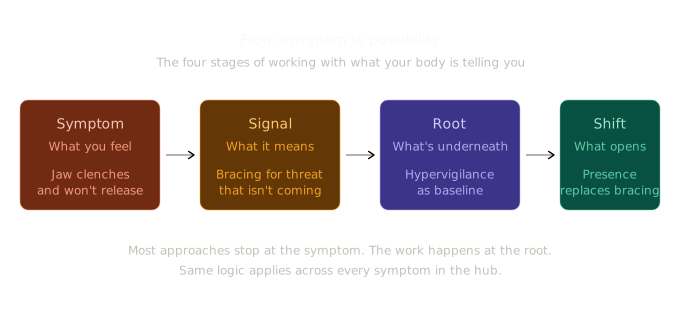
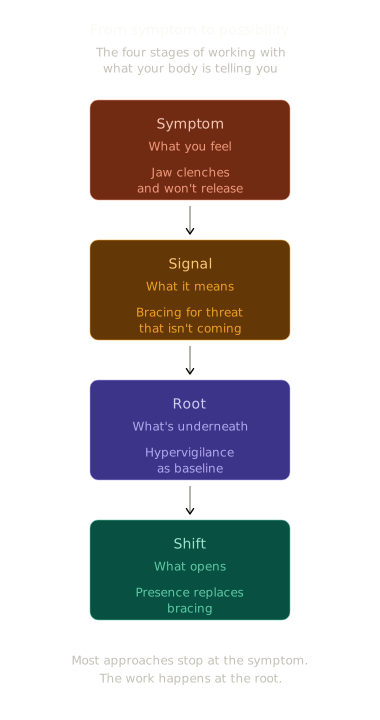
The reason these interventions fall short is that they treat the jaw as the problem. For most people with chronic clenching, the jaw isn't the problem. It's the location. The actual issue is upstream — a nervous system that has learned bracing as its baseline state, and a body that has nowhere else to land that load.
Jaw clenching is a bracing pattern.
The threat isn't in the room.
Here's what's actually happening: your body is preparing for impact that isn't coming. The nervous system has learned to stay on guard even in safe environments. The clench is the most common somatic expression of that guardedness, because the jaw is one of the most innervated and most reactive muscle groups in the body.
What you're bracing against isn't a current external threat. It's something internal — unresolved decisions, suppressed emotions, conversations you haven't had, things you've been holding without acknowledging. The body keeps the score, and the jaw is one of the most reliable places it keeps it.
The default underneath this is a hypervigilance pattern. The system has learned, over years, that staying alert equals staying safe. If I stay tense, I stay ready. If I stay ready, nothing catches me off guard. The jaw is the muscular expression of that strategy.
For high-performers in particular, the clenching gets reinforced because the lifestyle rewards vigilance — back-to-back calls, high-stakes decisions, performance under pressure. The body adapts. The clench becomes ambient. And then it becomes permanent.
Jaw clenching isn't a habit. It's a strategy.
And until the strategy changes, the muscle won't.
Sources: Is There Association Between Stress and Bruxism? A Systematic Review and Meta-Analysis (Frontiers in Neurology, 2020) - Frontiersin
Post-traumatic stress disorder: clinical and translational neuroscience from cells to circuits (PMC, 2022) - PMC
Why teeth grinding gets worse at night
During the day, you have access to conscious regulation. You can notice the clench, take a breath, release the jaw. Even if it returns thirty seconds later, the conscious override is available. At night, it isn't.
When you're asleep, the nervous system runs whatever pattern is most embedded — without supervision, without correction, without any conscious capacity to interrupt. If the underlying state is hypervigilance, the body braces. If the body braces, the jaw locks. If the jaw locks for hours, the teeth grind against each other through the night.
This is why mouthguards manage damage but don't stop grinding. The brace continues underneath the guard. The wear shifts from your teeth to the plastic. The pattern keeps running. You wake with a sore jaw because the muscles have been working through the night, regardless of what's between your teeth.
Nighttime grinding is, in a way, a more honest report than daytime clenching. It tells you what the nervous system does when nobody's watching. And what it does is keep bracing.
What changes when the pattern is addressed
When the hypervigilance pattern is recognised and rewired, the nervous system learns the difference between genuine threat and habitual alert. The jaw releases — not through massage or a night guard, but because the internal environment has changed.
People describe walking into difficult situations with a physical ease they haven't felt in years. The clench stops returning because the brace is no longer running. The dentist starts noticing less wear on the teeth. The morning headaches reduce. And the constant background tension that had become the felt sense of normal life starts to lift.
The more significant shift is what becomes available when the body stops bracing: presence. Energy that was going into holding everything together becomes available for actually being in the room. Listening sharpens. Decision-making clears. The cost of getting through the day drops. (Here's how that work actually happens.)
Your jaw isn't broken.
The pattern underneath it is.
Lead Yourself First.
How do I release jaw tension that won't go away?
Lasting release requires changing the bracing pattern, not just relaxing the muscle. Stretches, massage, and mouthguards manage the output — they don't touch the input. If the clench keeps returning despite everything you've tried, the work isn't on the jaw. It's on the nervous system that's keeping the jaw locked.
Why am I unconsciously clenching my jaw during the day?
Because the brace is automatic. Your nervous system has learned that staying tense equals staying ready. Once that pattern is established, it runs without your awareness — most often during focused work, difficult conversations, or anticipated stress. Catching it consciously helps short-term. Changing the underlying pattern is what stops it returning.
Why am I grinding my teeth in my sleep?
Because your nervous system is running its default pattern without conscious override. During the day, you can interrupt the clench. At night, you can't. Whatever your baseline activation level is during the day is what runs through the night, uninterrupted. If you grind your teeth in your sleep, your body is reporting that the brace is so deeply embedded it doesn't need your awareness to keep running. That's not a sleep problem. It's a daytime problem that becomes visible at night.
How do I stop grinding my teeth at night?
Lasting change requires addressing what your nervous system does in sleep, not just protecting your teeth from the damage. Mouthguards prevent wear but don't stop grinding — the muscles continue to work through the night regardless. To actually stop the grinding, the underlying hypervigilance pattern needs to be addressed at the root. When the nervous system stops bracing as its default state, the jaw stops locking when you sleep.
Can jaw clenching cause headaches?
Yes. Sustained muscle tension in the jaw, temples, and cheek muscles is one of the most common causes of tension headaches. The pain often radiates upward — pressure behind the eyes, a band across the forehead, soreness in the temples. If you have chronic headaches alongside jaw clenching, they're usually the same pattern expressing in two places.
What causes chronic jaw pain that won't go away?
For chronic jaw pain that doesn't respond to dental treatment, anti-inflammatories, or physical therapy, the most common cause is sustained muscle tension from unconscious clenching — both during the day and at night. The muscles work for hours longer than they're designed to, and the pain builds. The dental treatments address the wear and the inflammation. They don't stop the muscles from working. To actually stop the pain, the underlying clenching pattern needs to be addressed at the root. When the nervous system stops bracing as its default state, the jaw stops working overtime, and the pain reduces because the muscles finally get to rest.
Related signals
Chronic headaches and
pressure behind the eyes
Jaw clenching and tension headaches are often the same pattern in two locations. If the jaw is locked all day, the head usually pays for it by evening.
Fatigue that sleep doesn't fix
Holding tension all day costs significant energy — even when you're not aware of it. If your jaw is clenched and you wake up exhausted, that's not coincidence. That's the same system reporting from two angles.
Nervous stomach, bloating, and gut issues
Same nervous system running two bracing patterns. If your jaw is locked all day and your gut is knotted at the same time, both are reporting the same hypervigilance from different locations.