
Nervous stomach symptoms
and what they actually mean
The knot that arrives before a meeting. The bloating that appears on heavy weeks and clears on holiday. The morning nervousness you feel in your stomach before you've even had a thought. The IBS-type flare that shows up under pressure and settles when you finally rest. You've probably tried diet changes, probiotics, elimination foods, and maybe a gastroenterologist who told you everything looks fine. And yet the nervous stomach symptoms keep arriving — sometimes every day. This isn't a digestive problem. It's your nervous system reporting a load your conscious mind has rationalised away. This page explains what causes it, why standard advice misses, and what actually calms an anxious stomach at the root.
What a nervous stomach feeling actually looks like
It rarely matches a clinical description. People describe it as a knot in the stomach. A tightness that arrives unannounced. A flutter or a churn before a difficult call. Bloating that appears within an hour of a stressful conversation. Cramping that comes during periods of high pressure and disappears on holiday.
For some people, it's morning-loaded — a sensation of nervousness that's already there when they wake, before there's any cognitive content to attach it to. For others, it's situational — pre-meeting, pre-pitch, pre-presentation, and then it lingers all day even after the event is over. For many, it's daily — a nervous stomach every day, low-grade, present in the background.
The most disorienting version is the one where there's no obvious stress to point to. You weren't anxious about anything. You felt fine. But your stomach has been knotted all day anyway. That's not your body malfunctioning. That's your body telling you something your conscious mind didn't catch.
What makes this particularly frustrating is the test results. Bloodwork normal. Endoscopy clear. IBS diagnosis offered, often with the implication that there's nothing more to be done beyond fibre and stress management. The medical pathway closes. The nervous stomach symptoms continue.
What most advice gets wrong about
how to calm an anxious stomach
The standard playbook is well-known: low-FODMAP diet, peppermint oil, probiotics, fibre, hydration, mindfulness, smaller meals, chamomile tea, ginger. For acute digestive issues with clear physical causes, these tools work as designed.
For the chronic, stress-linked pattern this page is about, they consistently fall short. Symptoms improve briefly, then return. The probiotic helps for a week. The diet works for a month. And then a heavy quarter hits and the gut is in knots again — regardless of what you ate.
The reason most advice on how to calm or fix an anxious stomach misses is that it treats the gut as the problem. For most people with chronic nervous stomach symptoms, the gut isn't the problem. The gut is the messenger. The actual issue is upstream — in a nervous system that has been chronically activated, and in an emotional environment that doesn't have space for what's actually being felt.
You can't fix a messenger problem by changing what the messenger eats. And you can't stop an anxious stomach permanently by targeting the stomach itself.
What causes nervous stomach,
and why it isn't what you're eating
Here's what's actually happening: the gut and the brain are connected by the vagus nerve and a dense network of neural and chemical signalling — what's commonly called the gut-brain axis. The gut has its own nervous system, the enteric nervous system, often called the second brain. It contains around 500 million neurons and produces most of the body's serotonin.
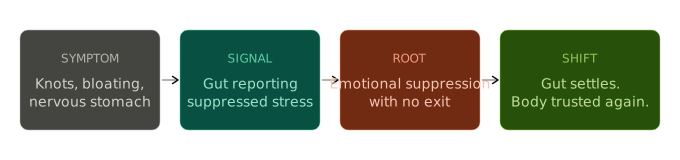
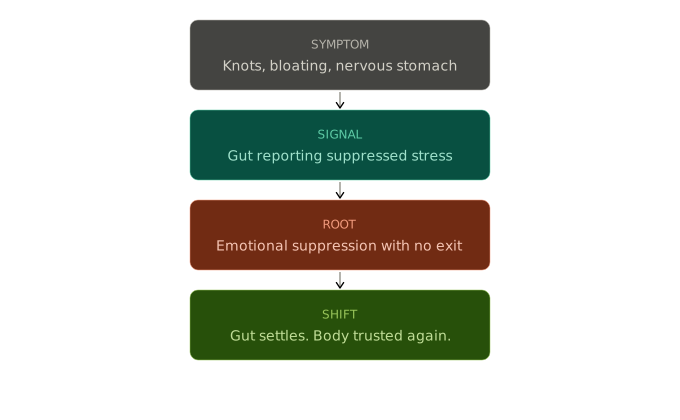
When you're under stress, this system responds — whether or not your conscious mind has acknowledged the stress. The body diverts resources away from digestion. Muscles in the gut tighten. Motility changes. Inflammation increases. You feel it as a knot, a churn, bloating, urgency, or pain. This is the mechanism behind nervous stomach anxiety — the gut isn't malfunctioning, it's responding accurately to a stress signal.
The reason this is so disorienting is the gap between conscious experience and physiological reality. You're calm in the room. Composed on the call. Professional and measured. Meanwhile your gut is reporting threat because the threat is real — it's just suppressed.
The default underneath this is emotional suppression. Feelings that aren't expressed get stored somatically. Often paired with a "stay composed" default — I don't show stress, so it goes somewhere else. The gut is usually where it goes.
And here's the part nobody tells you: this can happen without any cognitive anxiety at all. The mind has gotten so good at rationalising stress away that the gut becomes the only system still telling the truth. The knot you can't explain isn't random. It's the part of you that hasn't learned to lie about the load.
Your stomach is in knots because something in your day was a knot.
Your body knew. Your mind talked itself out of it.
What actually calms a nervous stomach, and what changes when the pattern is addressed
When emotional suppression patterns are addressed — when the internal environment becomes safe enough to feel rather than contain — the gut settles. Not through dietary changes. Through nervous system regulation. People are often stunned that the gut symptoms they've managed for years resolve once they address the emotional patterns underneath.
The morning knot stops arriving unannounced. The pre-meeting flutter becomes a normal arousal response rather than a full-body threat reaction. Bloating during high-pressure weeks reduces or disappears — because the system is no longer treating those weeks as threats to contain.
Beyond the physical, there's a quieter shift that often surprises people: they gain access to emotional data they've been cutting off. Intuition. Discomfort. Genuine excitement. The information their gut had been trying to send becomes available again — and they start trusting their gut in the metaphorical sense because the gut is finally speaking a language they've learned to hear.
This is what actually treating a nervous stomach looks like at the root. Not another probiotic. Not another elimination diet. A different relationship with the load that was generating the signal in the first place. The body, once heard, stops shouting. (Explore the approach behind this work)
Sources: The Vagus Nerve at the Interface of the Microbiota-Gut-Brain Axis (Frontiers in Neuroscience, 2018) — PMC
Your gut isn't broken.
The pattern underneath it is.
Lead Yourself First.
What causes a nervous stomach?
For most people with recurring nervous stomach symptoms, the cause isn't dietary — it's sustained activation of the gut-brain axis from emotional suppression and chronic stress. Your gut responds to threat your conscious mind has rationalised away. If your stomach is reporting daily — knots, bloating, flutters, urgency — the issue isn't usually what you're eating. It's what your body is carrying that has nowhere else to go.
Why do I have a nervous stomach every day?
Because the underlying pattern generating it is running every day. The gut isn't randomly acting up — it's responding accurately to a chronic activation state your nervous system has adopted as its baseline. Daily symptoms indicate that the stress isn't episodic, it's structural. Once the pattern underneath is addressed, the daily reports stop, because there's nothing daily to report on.
How do I fix a nervous stomach permanently?
Not by targeting the stomach. Temporary fixes — teas, medication, dietary changes — manage the symptom. Permanent change requires addressing what's generating the symptom in the first place. If the underlying pattern is emotional suppression and chronic nervous system activation, no dietary intervention will hold long-term. The fix that lasts comes from changing what your gut is reporting on — not from silencing the gut.
How do I calm an anxious stomach in the moment?
Short-term: slow diaphragmatic breathing activates the vagus nerve and downregulates the stress response, often within minutes. A warm drink, gentle movement, or stepping outside can also help. But these are relief tactics, not solutions. If you find yourself calming an anxious stomach several times a day, that's not a moment-management problem. That's a pattern problem, and it needs addressing at a different layer.
How do I stop an anxious stomach from coming back?
By changing what's generating it. An anxious stomach that keeps returning is a signal, not a malfunction. It's reporting on a stress load, an emotional pattern, or a chronic activation state your body has been carrying. Until that changes, it will keep returning — no matter how many symptomatic treatments you try. The way to stop it is to make sure there's nothing left to signal.
How do I treat nervous stomach anxiety naturally?
The most effective natural treatment isn't a supplement or a food — it's addressing the nervous system pattern generating the symptoms. Dietary changes, probiotics, and calming teas can help around the edges. But the treatment that actually works targets the source: reducing chronic activation, addressing emotional suppression, and giving the body a nervous system state it doesn't need to report threat about. That's slower and less packageable than a supplement. It's also the one that holds.
Can anxiety really cause IBS-like symptoms?
Yes — extensively documented. The gut-brain axis is bidirectional, meaning psychological stress directly affects gut motility, inflammation, and pain sensitivity. Functional gastrointestinal disorders like IBS often have a significant stress component, even when the symptoms appear purely physical. This doesn't mean the symptoms are imagined. It means the cause is upstream of the gut, in the nervous system itself.
When should I see a doctor about gut symptoms?
If you have persistent unexplained weight loss, blood in your stool, severe ongoing pain, fever, or symptoms that started suddenly and are escalating, a medical assessment is the right first step. This page addresses the kind of gut symptoms that come back normal on every test, that flare with stress and settle with rest, and that haven't responded to dietary or medical interventions.
Related signals
Chronic headaches and pressure behind the eyes
The gut and the head are reporting the same system from different angles. If both arrive together — knot in the stomach, pressure behind the eyes — that's not coincidence. That's one nervous system, two locations.
Snapping at people you love
Suppressed stress doesn't stay contained. The gut is one place it lands. The snap at home in the evening is another. Same default pattern, different exits — and one tends to make the other louder.
Getting sick every holiday,
every quarter
Chronic activation doesn't just knot your stomach. It suppresses immunity too. If your gut flares and you also get sick every time you finally stop, that's the same nervous system pattern showing up in two of your most sensitive systems.